
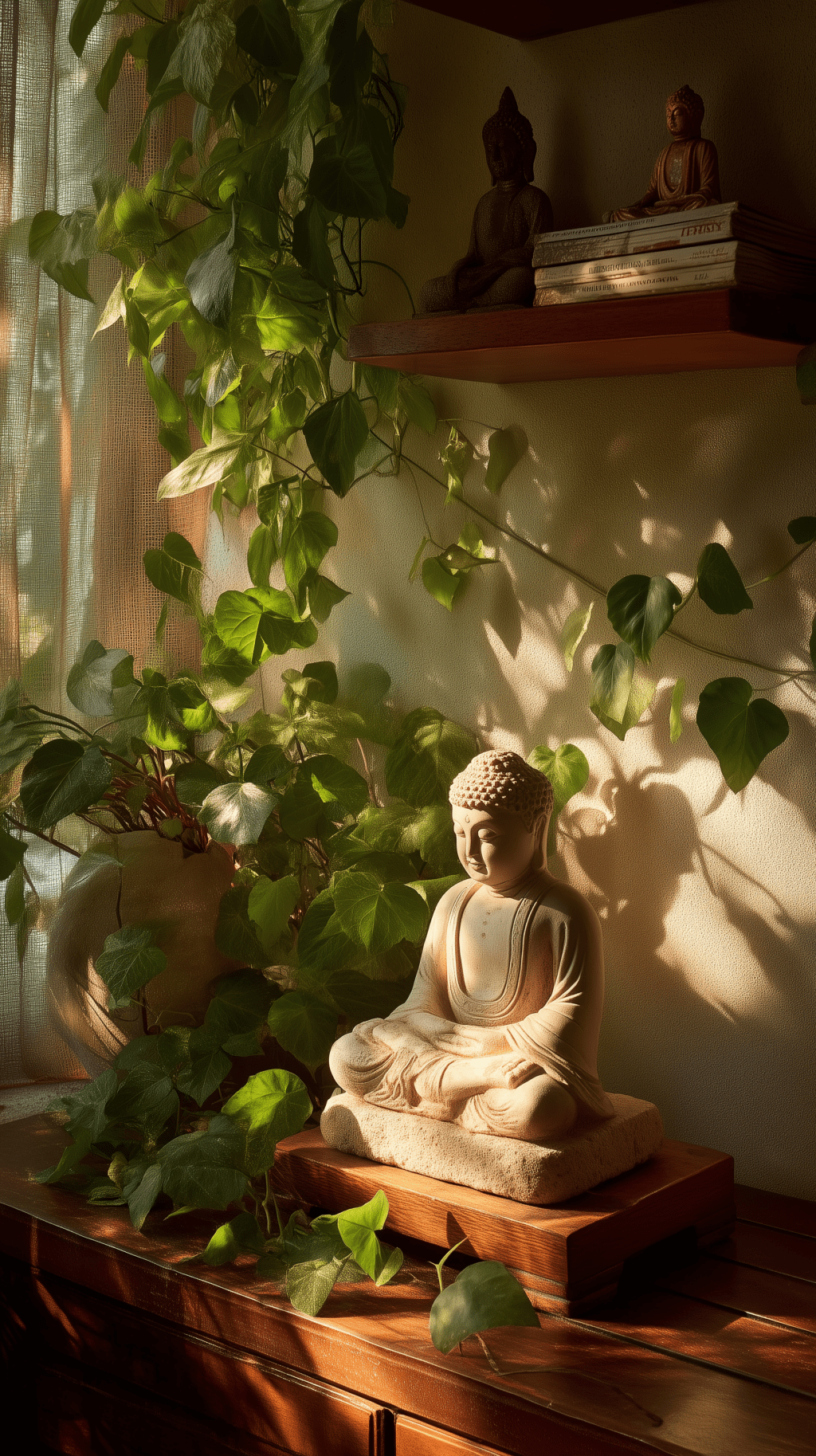
Your Space Matters More Than You Think
Before we talk about technique, duration, or consistency, we need to talk about something more basic and often overlooked: where you practice.
Many people believe mindfulness fails because they “can’t focus” or “aren’t disciplined enough.”
In reality, most beginners struggle because their environment is working against them.
Mindfulness doesn’t happen in a vacuum.
It happens in real rooms, real homes, real lives. And the space you practice in either supports your nervous system or quietly asks it to work harder.
This page is not about creating a perfect meditation corner.
It’s about creating a space that feels possible.
Why your space matters more than you think
Your nervous system is constantly taking in information.
Light, sound, clutter, temperature, smell. None of this is neutral.
When you sit down to practice mindfulness, your system asks a simple question first:
“Am I safe enough to settle here?”
If the space is loud, harsh, cluttered, or associated with stress, your body may stay alert even if your mind wants to be calm. That doesn’t mean you’re doing anything wrong. It means your system is responding exactly as it’s designed to.
A supportive practice space doesn’t force calm.
It invites it.
You don’t need a special room
Let’s clear this up right away:
You do not need a dedicated meditation room, expensive props, or a picture-perfect setup.
Your mindful space might be:
- a corner of your bedroom
- a chair near a window
- the end of your yoga mat
- the same spot on the couch every morning
- even your car during a lunch break
What matters is not size or aesthetics.
What matters is consistency and intention.
A familiar space tells your nervous system,
“Ah. I know what happens here.”
Over time, simply entering that space can become a cue for settling.
Quiet vs. lived-in spaces
Some people need silence to focus.
Others practice best in a home that still feels alive.
There is no correct choice here.
If you live alone or have access to a quiet room, silence may feel supportive.
If you live with others, have children, pets, or roommates, waiting for perfect quiet may mean never practicing at all.
Mindfulness is not about eliminating life.
It’s about relating to it differently.
You might practice:
- with soft background noise
- during early morning or late evening
- with a door closed, or simply turned slightly away from activity
- with headphones and gentle sound
The question is not “Is it silent?”
The question is “Does this space help me stay?”
Minimalism vs. comfort
Some people feel calmer in very simple spaces.
Others feel safer when the space feels warm and held.
Again, neither is better.
A minimal space might include:
- a clear floor or chair
- neutral colors
- very few objects
A comfort-focused space might include:
- a cushion or folded blanket
- a shawl or sweater
- a pillow against the wall or chair
- something familiar and grounding nearby
If you tend to feel restless or anxious, comfort often helps more than austerity.
If you tend to feel sleepy or foggy, simplicity may help more than coziness.
Let your space respond to your system, not an ideal.
Light, scent, and supportive objects
Small sensory choices can have a big impact.
Light
Natural light is grounding and regulating.
If that’s not available, softer, indirect lighting is often easier on the nervous system than bright overhead lights.
Scent
Smell is one of the fastest ways to influence the nervous system.
A subtle, familiar scent can help signal safety and presence.
This might be incense, a candle, essential oil, or simply fresh air.
Scent should always be optional. If it distracts or irritates you, skip it.
Supportive objects
Objects are not required, but they can help anchor attention.
This might include:
- a cushion that supports your hips
- a blanket for warmth
- a small stone, crystal, or meaningful object
- a journal nearby for reflection
- a timer so you don’t check the clock
These are not decorations.
They are signals to your system that this time matters.
Let the space be “good enough”
Your mindful space does not need to look the same every day.
It doesn’t need to be perfectly tidy.
It doesn’t need to impress anyone.
It only needs to answer one question honestly:
“Can I arrive here, as I am?” If the answer is yes, you’ve done enough.
🏡 Home Practices: Creating Your Mindful Space
Choose one or two of these exercises to begin with. There is no need to do them all at once.
1. The Space Scan
Sit or stand in the place where you plan to practice.
Slowly look around and notice:
- light
- sound
- temperature
- what feels supportive
- what feels distracting
Without changing anything yet, ask:
What here helps me settle? What makes it harder?
Write down a few observations.
2. One Small Change
Make one simple adjustment to your space today.
Examples:
- turning off a harsh light
- adding a pillow or blanket
- clearing just the area directly in front of you
- opening or closing a window
- moving your practice spot slightly
Notice how that one change affects your body when you sit down.
3. Create a Visual Cue
Choose one object that will live in or near your practice space.
This might be:
- a candle
- a stone
- a plant
- a folded cloth
- a meaningful personal item
Each time you see it, let it remind you:
This is a place I pause.
4. Practice Entering the Space
Once a day, step into your mindful space without practicing.
Just stand or sit for 10–20 seconds.
Notice:
- your breath
- your posture
- any shift in attention
This teaches your nervous system that the space itself is safe, even without effort.
5. Reflection: What Do I Need From This Space?
Take a few minutes to write or think about this question:
“When I come here to practice, what do I need most?”
There is no right answer.
Your needs may change over time.
Let your space evolve with you.
 Banyan & Nomad Toolbox