
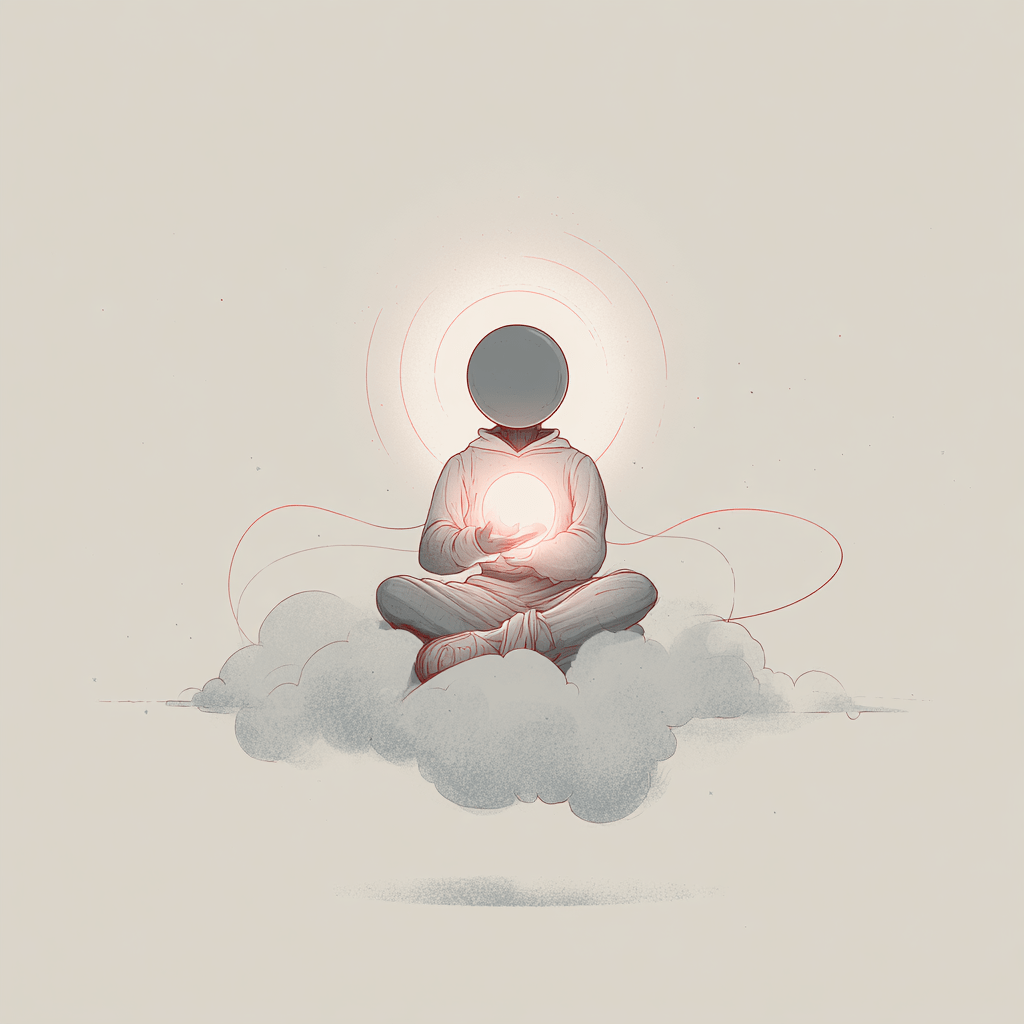
Up to this point, the work has focused on building the conditions that make mindfulness usable: understanding what mindfulness is, preparing the body, shaping the environment, and learning how attention behaves. This page brings those elements together so you can see how they function as a whole.
Mindfulness becomes sustainable when its parts work together. Posture affects breath. Breath affects attention. Environment affects nervous system tone. Attention affects how thoughts and sensations are handled. None of these operates in isolation.
The below helps you review what you’ve already learned and check whether your current setup supports consistent practice.
How the pieces fit together
Mindfulness practice rests on five practical elements: intention, body, breath, environment, and attention. Each one supports the others.
Intention gives practice direction. It answers why you are practicing and what you are prioritizing. Body preparation affects comfort and stability. Breath provides a steady physiological anchor. Environment reduces unnecessary stimulation. Attention skills determine how you respond when the mind wanders or the body feels restless.
If one element is strained, the others compensate. For example, if posture is uncomfortable, attention will drift toward discomfort. If the environment is overstimulating, breath may become shallow. If intention is vague, consistency often suffers.
Integration means noticing these relationships and adjusting accordingly.
Reviewing your current practice setup
Before moving into daily practice, take a few minutes to review how your practice is currently structured.
Consider the following questions:
Where do you usually practice, and does that space support settling?
What posture do you use most often, and does it feel stable over time?
Which anchor feels most accessible right now: breath, body sensation, or sound?
What time of day are you practicing, and how does your energy usually feel then?
There are no correct answers here. The purpose is to notice whether your setup feels workable, not ideal.
Signs your setup is working
A supportive setup does not eliminate difficulty, but it makes practice easier to return to.
Common signs include:
You can begin practice without prolonged resistance.
Discomfort is noticeable but manageable.
Attention wanders, but returning feels familiar.
You leave practice feeling oriented rather than depleted.
These signs indicate that the basic conditions for daily practice are in place.
Signs adjustments may be needed
Adjustments are part of practice, not a setback.
You may want to revisit earlier modules if:
Practice feels consistently overwhelming.
You feel physically uncomfortable within the first minute.
You regularly feel rushed or pressured during practice.
You avoid practice even when time is available.
In these cases, the most effective response is often to simplify: shorten duration, change posture, choose a different anchor, or adjust the environment.
Integration outside formal practice
Integration also means noticing how mindfulness shows up outside formal sessions.
You may begin to notice:
Earlier awareness of stress or tension.
More frequent pauses before reacting.
Greater clarity around physical cues.
A clearer sense of when to narrow attention or widen awareness.
These shifts often appear before changes in mood or concentration. They are part of learning.
Preparing to move into daily practice
Daily practice builds on what you’ve already established. It does not require perfection or complete readiness. It requires a basic level of support and familiarity.
Before continuing, it helps to confirm that:
You have a place to practice, even if it is simple.
You have a posture that works most days.
You have at least one anchor you can return to.
You have a realistic sense of how long you can practice.
 Banyan & Nomad Toolbox